
Shanice Lodge
Let me catch you up on the economics of the construction industry right now.
In September 2026, regular gasoline averaged $4.35 per gallon in the United States, while diesel averaged $6.29 per gallon. Why does this matter for construction professionals? Fuel is sometimes treated as a discrete operating expense. In practice, it moves through the construction lifecycle.
It affects the direct cost of running excavators, cranes, loaders, haul trucks, generators and other heavy equipment. It also raises transportation costs as materials travel from extraction and manufacturing facilities to fabricators, distributors and jobsites. Petroleum prices can flow into asphalt, PVC and HDPE piping, roofing membranes, insulation, sealants, adhesives and other petroleum-based construction materials.
You may not be able to control the price of diesel, but you can control how much uncertainty you accept before committing people, equipment, vehicles and capital to an opportunity, and with diesel costing a pretty penny, here’s how you can mitigate some construction cost risks.
How to know if a project will be profitable
Profitability increasingly depends on making the right decision before anyone turns the ignition. Diesel prices were 73.8% higher year over year, truck transportation costs were up 15.2%, and construction machinery and equipment prices have risen 4%. This means every project you decide on from now on must provide a timely return.
Before assigning estimators, conducting site visits or planning mobilization, you should be able to answer several basic questions:
- Does the opportunity match your company’s geography, project type, and preferred value?
- Who owns or is developing the project?
- Which architects, engineers, contractors or other firms are involved?
- Is the project actively moving forward?
- When is the bid expected to close?
- Are revisions or addenda changing the scope?
- What comparable activity is occurring in the surrounding market?
- Is the likely return worth the cost of pursuit?
Answering these questions requires a solid construction intelligence strategy.
How to know more before starting a construction project
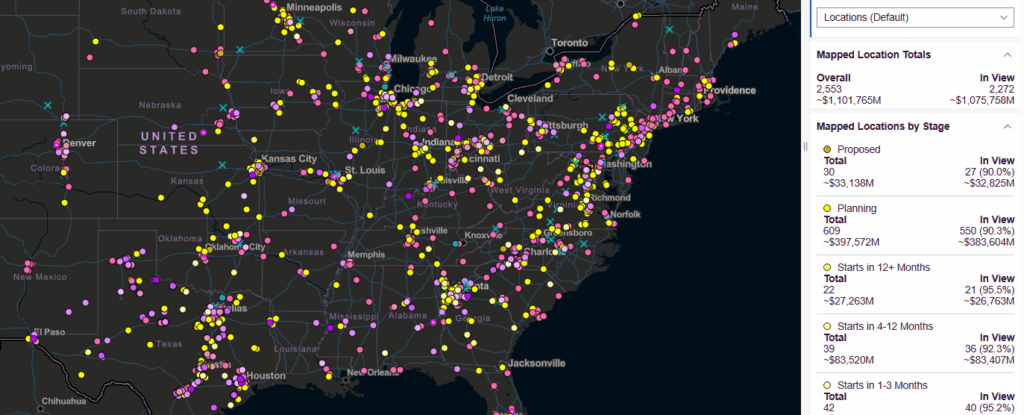
The most expensive part of the project is often sending people to do manual research. ConstructionWire, a Hubexo product, supports the early qualification process by connecting people to planned projects and the companies and decision-makers behind them. Hubexo researchers are actively in the field validating project details so your team can have the most up to date information before making a decision.
ConstructionWire reports cover projects from planning stages through development, along with profiles of owners, developers, tenants, architects, contractors and key contacts. Users can evaluate opportunities by stage, facility type, location, construction type and value before investing more substantial resources. Explore ConstructionWire.
How to visualize future development
Planned projects provide an early view of future development. Permits offer another form of intelligence: evidence of activity progressing through local approval processes.
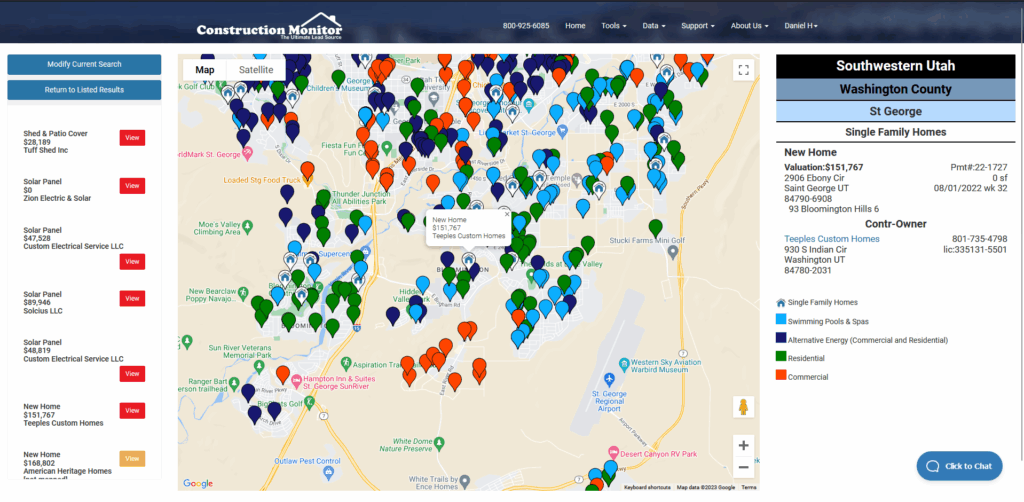
Construction Monitor tracks residential, solar and swimming-pool permit data nationwide. Its database includes more than 33 million permits, with new construction leads added hourly and permit information updated daily. Users can search permit records, identify active builders, compare geographic activity, map project locations, and analyze market share.
Want to turn permits into profits? Try Construction Monitor.
How to find more opportunities
A large pipeline can still be an unprofitable one if the opportunities are poorly matched or your team repeatedly discovers critical information too late.
Bid Ocean, a product of Hubexo, is designed to help companies identify bidding-stage opportunities regardless of where those opportunities were originally posted. The platform adds approximately 670,000 projects annually, surfaces more than 2,700 opportunities daily and organizes work across more than 500 industry categories, supported by over 10 years of market data.
Your team will able to spend less time finding opportunities and more time evaluating the ones that will provide a return. Explore Bid Ocean.

How to protect margins before bidding
Clearer specifications cannot insulate a project from energy-market volatility, but they can help reduce uncertainty around what must be priced, sourced, and delivered. In a market where freight and petroleum-linked materials are volatile, earlier product clarity gives estimators and procurement teams a stronger basis for evaluating exposure.
Ambiguous specifications, substitution issues, disconnected product information, and late sourcing decisions can introduce risk before work reaches the field. Lattira, powered by Hubexo, connects specifiers and manufacturers through an integrated platform centered on design, product selection and specification. Learn more about Lattira.

How to make the right construction decision for cost management
The immediate fuel shock may moderate. The U.S. Energy Information Administration expects gasoline and diesel prices to decline gradually after October, but it also expects distillate inventories to remain below their recent seasonal average and diesel prices to stay above $4 per gallon through 2027.
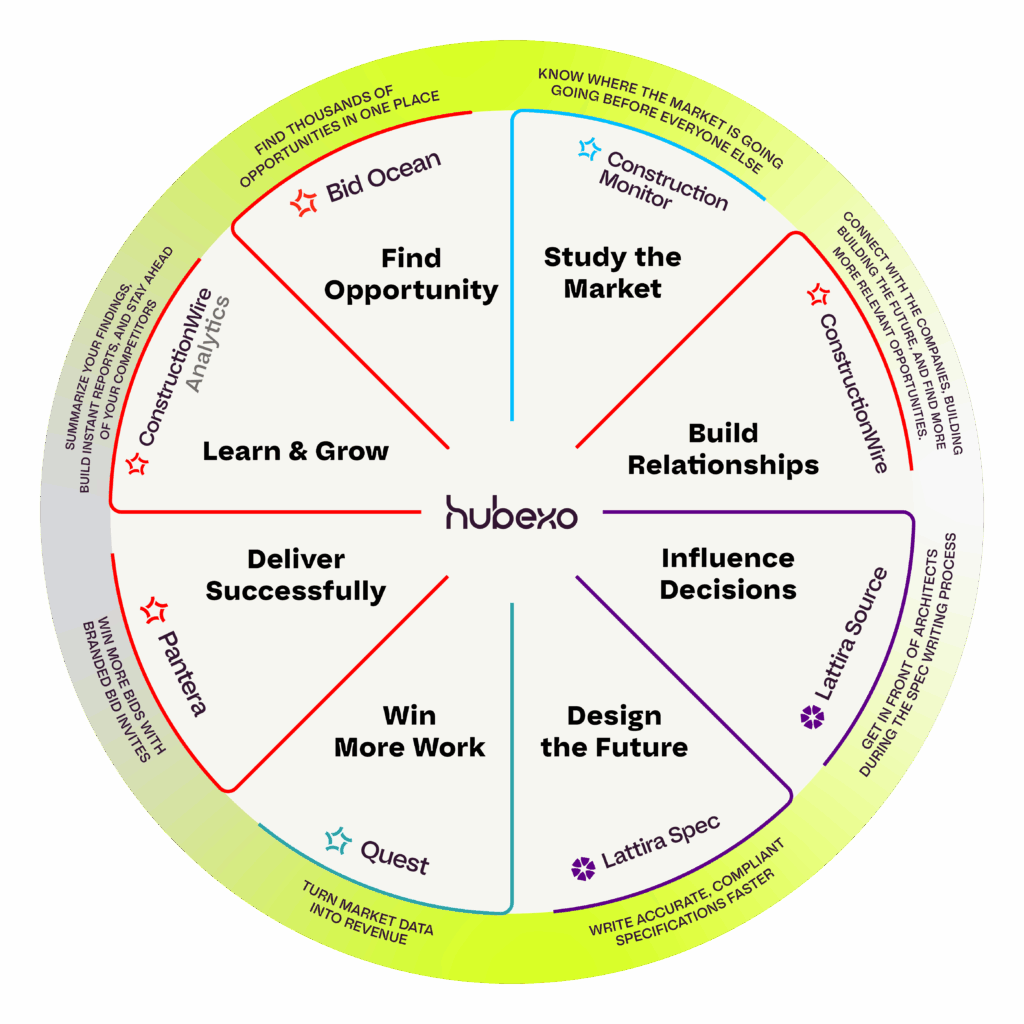
No individual platform can solve fuel inflation, but Hubexo can help you make strategic decisions to minimize cost and uncertainty at every stage of construction and preconstruction.
ConstructionWire shows you who’s building what, when, and where. Construction Monitor shows where permit activity and builder concentration indicate present emerging opportunity. Bid Ocean broadens bidding-stage discovery across hundreds of categories. Lattira brings greater connectivity to product selection and specifications. Learn more about how you can use construction intelligence to protect your margin.
Related
What Metrics Should Construction Leaders Track Every Month
Top Medical Office Building Types in Development
What is Infrastructure, and Why Should You Know Where It’s Being Built?
The Growing Opportunity for Senior Housing
Missing Out on Incentives? This Hotel Was—Until It Found $42K
